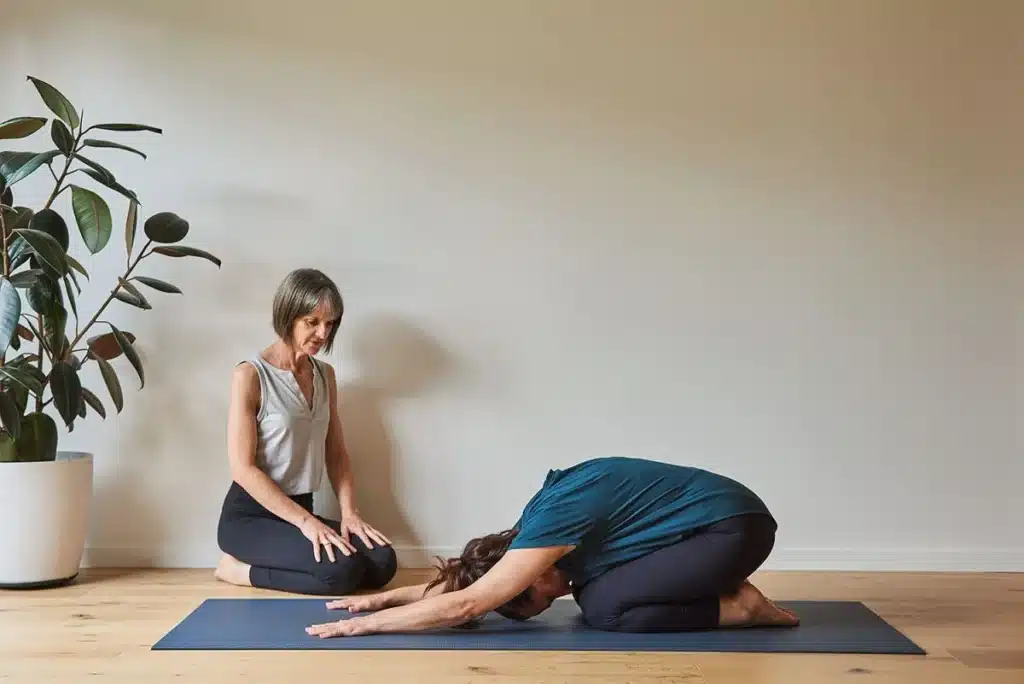
Yoga for therapy shows how body awareness can support mental health care. Yoga and psychology both focus on how the body and mind respond to stress and emotion. In some cases, yoga and psychotherapy work together when trained mental health professionals use simple body-based tools.
This approach can help people notice physical signals linked to feelings and thoughts across a wide range of experiences.
Key Takeaways
- Yoga and psychotherapy can work together when body awareness supports emotional regulation without replacing treatment.
- Yoga for therapy differs from yoga classes because it occurs during therapy sessions with licensed professionals.
- Clear training, consent, and boundaries are required when integrating yoga into psychotherapy.
- Yoga may support some mental health conditions, but it should not be viewed as a cure.
What Is Yoga Psychotherapy?
Yoga psychotherapy is a clinical approach that integrates yoga practices into therapy sessions. It does not replace psychotherapy or function as yoga classes. Instead, it supports awareness, calm, and reflection during treatment.
Mental health professionals decide when these tools fit the treatment plan. The focus stays on emotional health and safety. Clear consent guides the work.

Yoga integrated psychotherapy
Yoga-integrated psychotherapy takes place within a formal therapy setting. A licensed clinician leads the process and remains responsible for care. Body awareness supports conversation without shifting the focus away from therapy.
This approach addresses mental health conditions while respecting clinical limits. It follows ethical and professional standards.
How it differs from yoga classes
Yoga classes focus on movement, stretching, or relaxation. A yoga teacher or yoga instructors guide group practice without clinical goals. Therapy sessions focus on emotions, thoughts, and relationships.
Psychotherapy requires training and licensure. Yoga classes do not treat mental health conditions.
How Yoga and Psychotherapy Work Together
Yoga and psychotherapy work together when goals are clear. Integrating yoga into therapy can help some clients feel calmer before talking. This can improve focus during therapy sessions.
Not everyone benefits from body-based tools. The therapist decides when they are helpful.
Combining yoga with psychotherapy
Combining yoga with psychotherapy often includes breathing exercises or awareness of posture. These tools help regulate stress before discussion. Yoga practices support therapy but do not replace it.
The work remains talk-based. Body awareness is used with care.

Yoga and counseling in clinical care
Yoga and counseling connect when therapists look at how stress affects the body and mind.
Yoga practices may help clients notice physical reactions to emotion, similar to ideas found in mindfulness and psychotherapy. Both approaches must stay within their roles.
The Connection Between Yoga and Psychology
Yoga and psychology both study attention and awareness. The practice of yoga encourages noticing thoughts and sensations. Psychology looks at how these experiences shape behavior and mood.
For mental health professionals, integrating yoga-related tools requires training. Clinicians must assess timing, readiness, and safety.
Mind and body awareness
Mind-body awareness helps clients notice internal signals linked to emotion.
Recognizing these patterns can support insight during therapy sessions, especially when exploring themes like self-love in psychotherapy. Awareness supports reflection rather than treatment by itself.
Emotional regulation and attention
Yoga practices like breath work and breathing exercises can slow the stress response. The effect of yoga may include calmer breathing and better focus. This can prepare clients for deeper discussion.
Differences in Scope and Practice
Yoga therapists and yoga instructors work in wellness settings. Psychotherapists treat mental health conditions under strict legal and ethical rules. Knowing the difference protects clients.
Talk therapy focuses on thoughts, emotions, and relationships. Body-based work focuses on physical sensation.
Clinical roles and limits
Only licensed clinicians treat conditions such as post-traumatic stress disorder. Yoga instructors do not provide mental health treatment. Clear limits support safety and trust.
Training, Credentials, and Ethics
Training shapes how yoga is used in therapy. A certified yoga therapist completes additional education beyond yoga teaching. Mental health professionals complete formal clinical training.
Ethics guide safe care. Consent and clarity are always required.
Additional Ethical Risks to Consider
Using yoga in therapy can create risks if roles are unclear. Physical closeness and power differences may cause harm without training. Ethical care requires firm boundaries and consent.
Common risks include:
- Confusion between therapy and yoga instruction
- Unclear physical limits
- Feeling pressure to join body-based work
Clear structure helps reduce these risks.
When Yoga for Therapy Is Helpful
Yoga for therapy may help with specific goals when used carefully. It does not fit every person. Assessment guides decisions.
Research supports yoga as a supportive practice rather than a replacement for psychotherapy. Results vary widely across individuals and needs.

Anxiety, trauma, and development
Anxiety, trauma, and developmental stage influence how the body reacts to stress. Yoga practices may help some people notice physical signs of anxiety, which can support regulation during therapy sessions.
For individuals with post-traumatic stress disorder, gentle body awareness may build tolerance over time when guided by trained professionals. Children and adolescents may benefit from simple body-based tools that align with their developmental stage.
If physical symptoms persist, consult a physician.
Yoga Philosophy and Key Books
The Yoga Sutras of Patanjali remain a foundational text and inform many yoga practices today. Other commonly referenced works include the Bhagavad Gita, which explores duty, action, and self-awareness, as well as modern texts such as The Heart of Yoga by T.K.V. Desikachar and Yoga Body by Mark Singleton.
Choosing the Right Approach
Choosing the right approach depends on needs and goals. Some people benefit from yoga for therapy alone. Others need structured psychotherapy.
Many clinicians take a holistic approach that considers both emotional and physical experience. Psychotherapy alone treats complex concerns, including work done by experienced psychoanalysts in NYC. Some people choose combined or parallel care when appropriate.
If you are unsure which path fits your situation, consider scheduling an appointment to discuss your goals, symptoms, and options with a qualified professional.
Because Your Happiness Matters.