

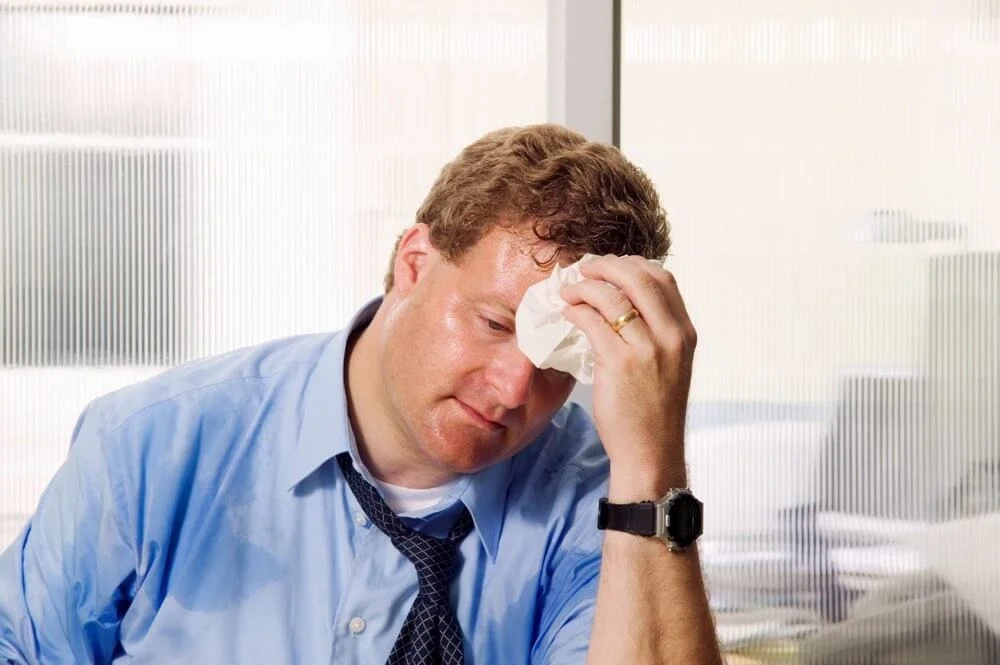
Yes, anxiety can cause sweating. Anxiety sweating occurs when the sympathetic nervous system activates the fight-or-flight response. This response prepares the body to deal with stress. It can happen during panic attacks, emotional stress, or daily life worries.
Anat Joseph, LCSW, PsyA, explains that this reaction is part of the normal stress response and is not always a medical condition. Understanding this helps explain why feeling anxious causes physical symptoms.
Key Takeaways
- Anxiety sweating happens when the body reacts to stress, even without heat or exercise.
- Emotional stress activates apocrine glands, which produce thicker sweat and may cause a stronger odor.
- Sweating caused by anxiety is normal, but excessive sweating may need medical evaluation.
- Therapies such as Cognitive Behavioral Therapy, psychoanalysis, and the psychodynamic approach help reduce anxiety symptoms.
- Deep breathing, relaxation techniques, and healthy routines help reduce excessive sweating.
Can anxiety cause sweating
What causes stress sweats
Stress sweats happen when the brain reacts to emotional stress, especially when anxiety is caused by stress. The body increases heart rate and sweat production. This prepares the body to react. This explains why sweating caused by anxiety happens without exercise or heat.
This is common in panic disorder, generalized anxiety disorder, and social anxiety disorder. These mental health conditions increase nervous system activity. This causes nervous sweating more often.
Fight or flight response
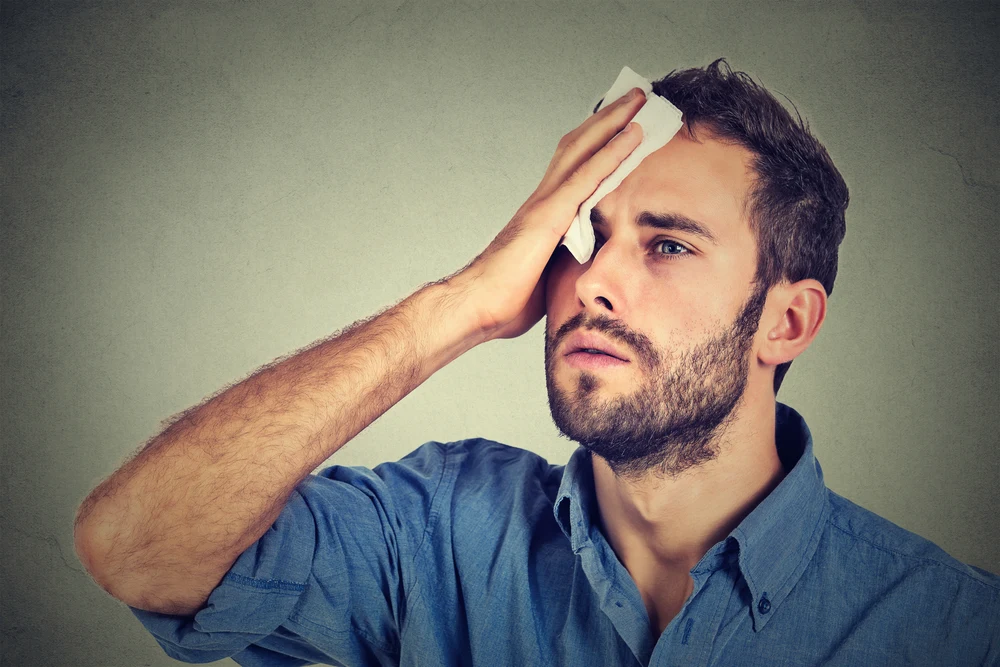
The fight-or-flight response prepares the body to respond to danger. Anxiety activates this response even when there is no real danger. This explains anxiety attack sweating.
Stress hormones activate sweat glands. This causes excessive sweating during emotional stress.
Stress hormones and sweat glands
Stress hormones activate sweat glands during emotional stress. Apocrine glands produce thicker sweat. This sweat differs from exercise sweat.
Difference between apocrine and eccrine glands
Eccrine glands produce clear sweat. This sweat cools the body. Apocrine glands produce thicker sweat during emotional stress. This explains anxiety, sweating, and smell.
This sweat may cause a stronger odor.
What does sweating caused by anxiety feel like
Does anxiety cause you to sweat suddenly
Yes, anxiety can cause sweating suddenly. This happens when the stress response activates fast.
This explains sudden excessive sweating during emotional stress.
Anxiety attack, sweating symptoms
Anxiety attacks and sweating happen during panic attacks. Panic attacks increase heart rate and physical symptoms. Other physical symptoms may include dizziness or chest discomfort.
Emotional sweating vs normal sweating
Normal sweating cools the body. Emotional sweating happens due to anxiety.
This helps identify emotional causes.
Where emotional sweating occurs
Anxiety, sweating, face, and forehead
The face has many sweat glands. Emotional stress activates these glands fast. This causes visible sweating.
Anxiety sweating armpits explained
The armpits contain apocrine glands. Emotional stress activates these glands.
This produces thicker sweat. This sweat may cause odor.
Anxiety, sweating, hands, and feet
Hands and feet have many sweat glands. Emotional stress activates these glands.
This is common during anxiety.
When excessive sweating occurs
Anxiety, sweating at night
Anxiety and sweating at night happen when stress continues during sleep, which is common in people wondering why anxiety happens at night. The stress response stays active.
This may disrupt sleep.
Stress and anxiety triggers
Triggers include social stress, fear, and uncertainty. These activate the stress response.
Triggers differ between individuals.
Why does sweating caused by anxiety worsen anxiety
Visible sweating increases emotional awareness. This may increase anxiety symptoms.
This creates a cycle between anxiety and excessive sweating.
This cycle may affect quality of life.
How to stop anxiety sweating
How to get rid of anxiety sweating
Deep breathing helps calm the stress response. This reduces anxiety and sweating.
Relaxation techniques help improve emotional balance.
Natural remedies for anxiety and sweating
Exercise improves nervous system balance. Good sleep also helps.
These help reduce excessive sweating.
Anxiety, sweating, and treatment options
Therapy helps improve emotional awareness. Psychotherapy helps reduce anxiety symptoms.
Hyperhidrosis and anxiety sweating
Hyperhidrosis is a medical condition that causes excessive sweating. Anxiety can worsen hyperhidrosis symptoms.
Therapy for anxiety and sweating
Working with ananxiety therapist in NYC helps identify emotional triggers that cause anxiety and sweating. Cognitive Behavioral Therapy helps you recognize anxious thoughts and respond in healthier ways.
Psychoanalysis helps explore deeper emotional patterns that may increase anxiety. The psychodynamic approach helps improve emotional awareness and understanding over time.
These therapies help strengthen emotional regulation. As anxiety decreases, the stress response becomes less active. This helps reduce excessive sweating and improves daily comfort.
Medication and professional treatment
Medication to stop anxiety and sweating
Medication can help reduce anxiety and sweating by calming the stress response and lowering nervous system activity. Doctors may prescribe treatment to reduce anxiety symptoms and excessive sweating during panic attacks or daily stress.
Medical supervision ensures the treatment is safe and appropriate. Medication is often combined with therapy to address both physical symptoms and emotional causes.
Medical conditions associated with excessive sweating
Doctors evaluate medical condition causes such as hyperhidrosis or thyroid problems.
Medical evaluation ensures a correct diagnosis.
