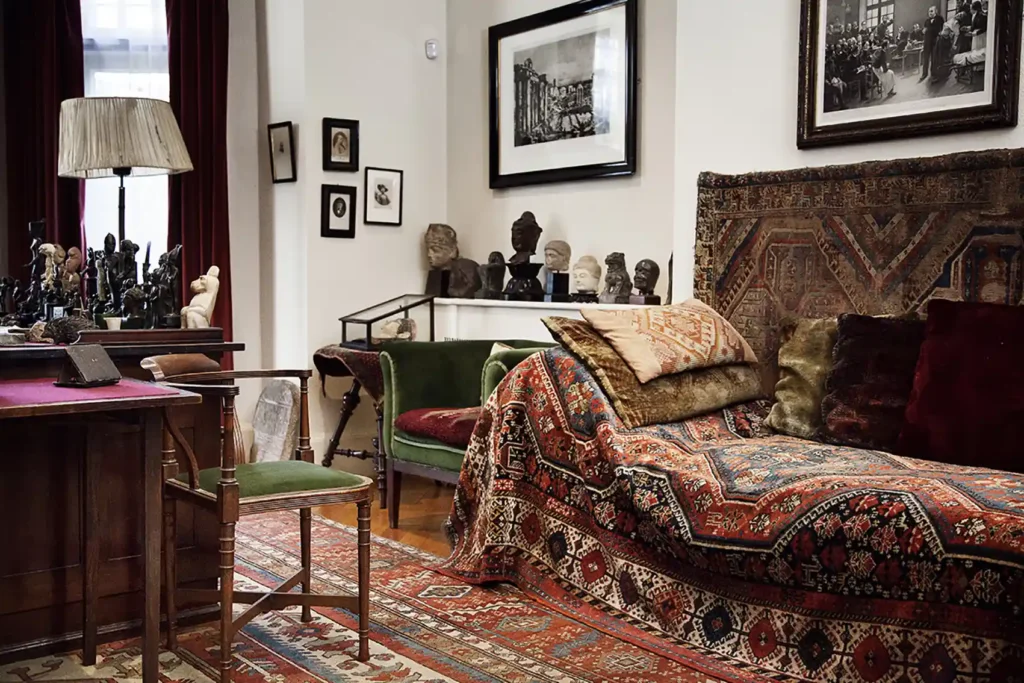
The psychoanalysis couch is both practical and symbolic in therapy. Sigmund Freud introduced it to help patients speak freely without eye contact, allowing hidden thoughts to surface.
The psychoanalysis couch creates comfort and honesty, helping clients explore emotions and experiences. It also represents reflection and open conversation at the center of psychoanalytic work.
Anat Joseph, LCSW, PsyA, draws on psychoanalytic principles in her work across New York and New Jersey. She provides clients with a safe, private space for reflection and self-understanding, integrating insight-based methods within her broader therapeutic practice.
Key Takeaways
- The psychoanalysis couch, created by Sigmund Freud, helps clients speak openly and uncover thoughts without feeling observed.
- It symbolizes trust, comfort, and openness in both traditional and modern therapy settings.
- Freud used the couch to support free association, helping clients explore hidden feelings and early experiences.
- Modern therapists, including Anat Joseph, adapt the couch or similar setups to each client’s comfort level while keeping the same purpose.
- The psychoanalysis couch separates psychoanalysis from counseling by encouraging deep self-reflection rather than short-term solutions.
Purpose and Technique of the Psychoanalytic Couch
The couch in psychoanalysis helps clients talk freely without constant eye contact. This method, called free association, allows thoughts and emotions to surface naturally.
Therapists use this setup to lower social pressure and help clients focus inward. Reclining helps people explore ideas while the therapist listens closely to tone and pauses. This builds understanding and long-term growth.
The couch is not used in every session, but it remains one of the most recognized parts of therapy.
Why Lie on the Couch in Psychoanalysis?
Lying on the couch helps clients relax and feel less self-conscious. It supports free association, making it easier to express emotions and memories.

What Is the Couch Technique in Psychology?
Freud developed the couch technique to remove visual distractions and keep attention on the client’s thoughts rather than the therapist’s reactions. It is still an important part of psychoanalytic training today.
Freud’s Couch Therapy: History and Symbolism
Freud’s consulting room was warm and comfortable. His couch, covered with Persian rugs and cushions, helped patients feel calm and open.
Freud believed the couch reduced pressure, making unconscious thoughts more readily accessible. This idea became a key part of psychoanalytic theory.
The couch, a gift from one of Freud’s patients, came to represent safety and trust. Today, it still stands for reflection and discovery.
The principles behind Freud’s couch continue to guide today’s practice, offering clients a safe and private space to explore emotions and past experiences.
Freudian Couch Meaning and Legacy
The Freudian couch stands for trust, insight, and emotional exploration. Its meaning still shapes how many therapists design their spaces today.
Modern Use of the Couch in Psychoanalysis
In today’s therapy settings, the use of the couch in modern psychoanalysis varies. Some therapists keep the classic setup, while others use chairs for a more relaxed feeling.
The couch has also become a cultural symbol of therapy and self-reflection. It often appears in films and art as a sign of emotional honesty.
Therapists like Anat Joseph adjust their approach to fit each client. Some use chairs or online sessions, but the goal stays the same: to encourage openness and self-awareness.
For clients who prefer remote care, psychoanalysis online provides the same depth of reflection through secure, private sessions.
Even as therapy evolves, the purpose of the couch remains – to give space for honest and thoughtful conversation.

Psychoanalysis vs Counseling: Understanding the Difference
Both humanism vs psychoanalysis support emotional well-being, but they differ in focus. Psychoanalysis looks into deep emotional patterns and early life experiences. Counseling addresses current issues and offers practical solutions.
The psychoanalysis couch clearly shows this difference. Counseling focuses on face-to-face dialogue, while psychoanalysis encourages deeper, more reflective exploration.
Key differences include:
- Structure: Psychoanalysis often has several sessions per week. Counseling is usually once a week.
- Focus: Psychoanalysis studies emotional roots. Counseling focuses on present problems.
- Client Role: Psychoanalysis allows free talking. Counseling is more guided and goal-focused.
Preparing for Psychoanalytic Therapy
Before starting psychoanalysis, clients often ask what to expect. The setup may include a couch, chair, or both, depending on the therapist.
Tips for your session:
- Be open: Share your thoughts honestly.
- Don’t overthink: Let words come naturally.
- Be patient: Real change takes time and trust.
Anat Joseph helps clients explore how past experiences affect their current emotions. Whether sitting or reclining, clients work toward understanding themselves in a supportive setting.
If you’re ready to begin your own process of reflection and growth, consider scheduling an appointment.